SAMPLE PUBLICATIONS
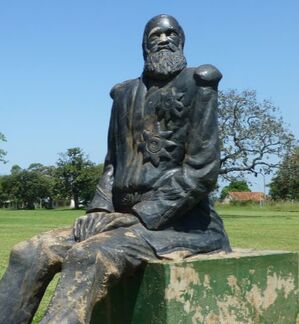
"The First White Man to See the Nile: Decolonising Secondary-School History Curricula in Uganda" in
Bruc-Lochart, Earl, Taylor (eds): Decolonizing State & Society in Uganda: The Politics of Knowledge & Public Life (James Currey).
Abstract: In 1973, officials from the Ministry of Education gathered to discuss reforms of Uganda's education system. "[I]n subjects like history, geography and so forth," said one official, "the syllabus must be orientated; instead of saying Speke 'discovered' the source of the Nile we are now saying he was the first white man to see it . . . . This is the development in the curriculum, we have got alternatives.” The comment, which elicited laughter from those present, reflected ongoing efforts to shake loose the curriculum's British-colonial moorings. It also exposed the challenges of harnessing such a project for the national needs of a fragmented population. Progress toward a pan-African curriculum that reclaimed African ownership of the past masked a chronic lack of agreement about Uganda's own history. While Speke's exploits were put in proper perspective, the creation of a national narrative stagnated. In this chapter I explore the decolonisation of Uganda's secondary-school History curricula for what it can tell us about the relationship between History education and state-building, and the politics of post-colonial narrative. I argue that secondary schools have operated simultaneously as spaces of decolonisation and stagnation. At the heart of this tension are debates over colonial legacies, national identity, and the politicization of History education.
Bruc-Lochart, Earl, Taylor (eds): Decolonizing State & Society in Uganda: The Politics of Knowledge & Public Life (James Currey).
Abstract: In 1973, officials from the Ministry of Education gathered to discuss reforms of Uganda's education system. "[I]n subjects like history, geography and so forth," said one official, "the syllabus must be orientated; instead of saying Speke 'discovered' the source of the Nile we are now saying he was the first white man to see it . . . . This is the development in the curriculum, we have got alternatives.” The comment, which elicited laughter from those present, reflected ongoing efforts to shake loose the curriculum's British-colonial moorings. It also exposed the challenges of harnessing such a project for the national needs of a fragmented population. Progress toward a pan-African curriculum that reclaimed African ownership of the past masked a chronic lack of agreement about Uganda's own history. While Speke's exploits were put in proper perspective, the creation of a national narrative stagnated. In this chapter I explore the decolonisation of Uganda's secondary-school History curricula for what it can tell us about the relationship between History education and state-building, and the politics of post-colonial narrative. I argue that secondary schools have operated simultaneously as spaces of decolonisation and stagnation. At the heart of this tension are debates over colonial legacies, national identity, and the politicization of History education.
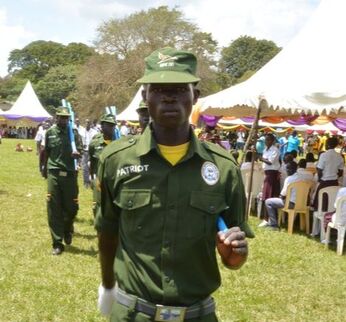
"Dialogue in the Trenches: Confronting Political Narratives in Ugandan Secondary Schools"
in Elazar Barkan, Goschler, and Waller (eds): Historical Dialogue and the Prevention of Mass Atrocities (Routledge).
Abstract: In 2010, Uganda implemented a citizenship training program known as patriotism clubs in secondary schools throughout the country. With a curriculum designed by the President's Office and the military, the clubs represent a renewed interest by Yoweri Museveni and the National Resistance Movement in the political uses of historical revision. This chapter examines History teachers' responses to patriotism clubs and the strategies they are using to address the legacies of Uganda's conflict history in their classrooms. Despite curricular challenges and fears of censorship, individual educators are using creative pedagogy, discourse, and critical analysis to create fragile but vital spaces for historical dialogue. The chapter argues that while still in their infancy, these subterranean dialogues have the potential to reinterpret political narratives in ways that mitigate risks for future violence, even in the absence of curricular reform and institutionalized mechanisms to address conflict.
in Elazar Barkan, Goschler, and Waller (eds): Historical Dialogue and the Prevention of Mass Atrocities (Routledge).
Abstract: In 2010, Uganda implemented a citizenship training program known as patriotism clubs in secondary schools throughout the country. With a curriculum designed by the President's Office and the military, the clubs represent a renewed interest by Yoweri Museveni and the National Resistance Movement in the political uses of historical revision. This chapter examines History teachers' responses to patriotism clubs and the strategies they are using to address the legacies of Uganda's conflict history in their classrooms. Despite curricular challenges and fears of censorship, individual educators are using creative pedagogy, discourse, and critical analysis to create fragile but vital spaces for historical dialogue. The chapter argues that while still in their infancy, these subterranean dialogues have the potential to reinterpret political narratives in ways that mitigate risks for future violence, even in the absence of curricular reform and institutionalized mechanisms to address conflict.
“Creating a Nation Without a Past: Secondary-school Curricula and the Teaching of National History in Uganda,” in
Jim Williams and Bellino (eds): (Re)Constructing Memory: Education, Identity and Conflict (Rotterdam: Sense Publishers)
Abstract: In this chapter I explore the development of History curricula used in Ugandan secondary schools since 1925 and address the question of how History teachers’ responses to state-sponsored curricula impact what students learn about the national past. The development of History curricula in Ugandan secondary-schools has been characterized by a paradox. While both colonial and post-independence leaders have appropriated curricula in their efforts to shape the political attitudes of students, the fear that History could also exacerbate political opposition and internal divisions has led to silences about world history, global politics, and the national past. In both periods, teachers have been at the forefront of contesting the historical silences found in state-sponsored curricula. I argue that a fuller understanding of how History is being taught in Uganda requires an analysis of both official curricula and the daily decisions that educators make in the classroom.
Jim Williams and Bellino (eds): (Re)Constructing Memory: Education, Identity and Conflict (Rotterdam: Sense Publishers)
Abstract: In this chapter I explore the development of History curricula used in Ugandan secondary schools since 1925 and address the question of how History teachers’ responses to state-sponsored curricula impact what students learn about the national past. The development of History curricula in Ugandan secondary-schools has been characterized by a paradox. While both colonial and post-independence leaders have appropriated curricula in their efforts to shape the political attitudes of students, the fear that History could also exacerbate political opposition and internal divisions has led to silences about world history, global politics, and the national past. In both periods, teachers have been at the forefront of contesting the historical silences found in state-sponsored curricula. I argue that a fuller understanding of how History is being taught in Uganda requires an analysis of both official curricula and the daily decisions that educators make in the classroom.
“Assessing National Mechanisms for Atrocity Prevention in Africa’s Great Lakes Region”
Journal of Peacebuilding & Development, 2019 (with co-author Ashad Sentongo)
Abstract: In recent years, states and regional bodies in Africa’s Great Lakes Region have experimented with new models for the development of policies that prevent violent conflict. One such initiative has been the establishment of National Mechanisms for Genocide and Atrocity Crimes Prevention - multi-sectorial bodies tasked with developing coordinated national strategies for the prevention of mass violence. Through its work in prevention education, training and technical assistance, and capacity building, the Auschwitz Institute for Peace and Reconciliation (AIPR) has been partnering with members of these National Mechanisms to support and assess their efforts. This article presents the results of this work. We argue that despite significant challenges in institutionalization and funding, National Mechanisms have made tangible contributions to the development of national prevention policies and hold strong future promise for the promotion of regional peace and stability in Africa’s Great Lakes Region.
Journal of Peacebuilding & Development, 2019 (with co-author Ashad Sentongo)
Abstract: In recent years, states and regional bodies in Africa’s Great Lakes Region have experimented with new models for the development of policies that prevent violent conflict. One such initiative has been the establishment of National Mechanisms for Genocide and Atrocity Crimes Prevention - multi-sectorial bodies tasked with developing coordinated national strategies for the prevention of mass violence. Through its work in prevention education, training and technical assistance, and capacity building, the Auschwitz Institute for Peace and Reconciliation (AIPR) has been partnering with members of these National Mechanisms to support and assess their efforts. This article presents the results of this work. We argue that despite significant challenges in institutionalization and funding, National Mechanisms have made tangible contributions to the development of national prevention policies and hold strong future promise for the promotion of regional peace and stability in Africa’s Great Lakes Region.
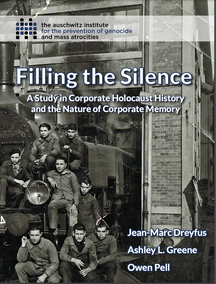
Filling the Silence: A Study in Corporate Holocaust History and the Nature of Corporate Memory (edited collection)
Auschwitz Institute for the Prevention of Genocide and Mass Atrocities.
Abstract: In 1938, 18 apprentices gathered around a train for a photograph at the Nîmes learning center in Southern France. They trained to become cheminots (the traditional French term for “railway workers”) for the country’s new, national railway – the Société Nationale des Chemins de Fer Français (SNCF). Forged through the merger of five private regional companies, SNCF represented the idea of a united and more equitable France. Two years later, SNCF’s cheminots found themselves operating in a defeated, and subsequently occupied, country. These railway workers – and their company – were now central to the German war effort, including the Nazis’ plans to exterminate Europe’s Jews. Trains that had hitherto connected the country through networks for transportation now carried people to their deaths. The legacy of SNCF would never be the same.
The articles in this edited collection aim to explore a framework and best practices for corporations interested in more intentionally confronting their past and current involvement in atrocity crimes using the case study of the SNCF, whose trains have become synonymous with memories of the Holocaust following the conclusion of WWII. Corporations are comprised of individuals and, as such, have the capacity to develop collective ethos and practical policies that situate them at the forefront of responding to and preventing their involvement in atrocity crimes. They can, in a word, be more than the law requires.
Auschwitz Institute for the Prevention of Genocide and Mass Atrocities.
Abstract: In 1938, 18 apprentices gathered around a train for a photograph at the Nîmes learning center in Southern France. They trained to become cheminots (the traditional French term for “railway workers”) for the country’s new, national railway – the Société Nationale des Chemins de Fer Français (SNCF). Forged through the merger of five private regional companies, SNCF represented the idea of a united and more equitable France. Two years later, SNCF’s cheminots found themselves operating in a defeated, and subsequently occupied, country. These railway workers – and their company – were now central to the German war effort, including the Nazis’ plans to exterminate Europe’s Jews. Trains that had hitherto connected the country through networks for transportation now carried people to their deaths. The legacy of SNCF would never be the same.
The articles in this edited collection aim to explore a framework and best practices for corporations interested in more intentionally confronting their past and current involvement in atrocity crimes using the case study of the SNCF, whose trains have become synonymous with memories of the Holocaust following the conclusion of WWII. Corporations are comprised of individuals and, as such, have the capacity to develop collective ethos and practical policies that situate them at the forefront of responding to and preventing their involvement in atrocity crimes. They can, in a word, be more than the law requires.
"Teaching 'Introduction to Genocide Studies'", in
Samuel Totten (ed): Teaching About Genocide, 3rd ed. (Rowman & Littlefield)
Samuel Totten (ed): Teaching About Genocide, 3rd ed. (Rowman & Littlefield)